Household egocentric
- Curated hours
- 11,778
- Clips
- 29,247
- Participants
- 1,802
- Tasks / domains
- 50 / 9
14,407 curated hours across four synchronized streams, measured on the axes that decide whether egocentric data is trainable.

Robotics has a data problem, but it isn't a data-volume problem.
Large language models scaled because the internet already contained dense semantic information: ideas, instructions, conversations, code, and reasoning. Video foundation models have benefited from a similar advantage. Internet video contains rich priors about motion, geometry, causality, object permanence, human behavior, and everyday physics.
Robotics builds on those priors rather than relearning the physical world from scratch.
The missing layer is not more generic pretraining data. It is high-quality mid-training data that adapts video foundation models from broad world understanding to egocentric behavior and, eventually, robot action. This data needs dense interactions, clear hand visibility, long-horizon tasks, diverse environments, failures, recoveries, and signals beyond video such as body motion, contact, pressure, and force.
The path may seem indirect: first learn from real-world video, then from embodied human behavior, and finally from robot-specific data. But the alternatives are difficult to scale.
Autonomous driving benefits from using nearly the same vehicles, sensors, and action spaces for both collection and deployment. General robotics does not. Robots differ in cameras, kinematics, grippers, control rates, and physical limits, making large-scale teleoperation expensive and platform-specific. Simulation is essential, but it also depends on grounded data about contact, materials, friction, and failure.
There is also a perception bottleneck. Many action models running on robots today operate on relatively low-resolution visual inputs, making precise manipulation difficult when objects, fingers, or contact points occupy only a small part of the frame. Multi-camera data helps close this gap by combining global context with close-range wrist views, much like autonomous vehicles use multiple cameras to cover different parts of the road and reduce blind spots.
Humans remain the most scalable source of rich manipulation behavior, but human demonstrations must be captured in a form that preserves what can transfer across embodiments: intent, task structure, trajectories, contact events, coordination, and recovery strategies.
Project Bumblebee is built around this premise.
It combines egocentric video, synchronized head-and-wrist views, motion capture, and embodied interaction signals to create an adaptation layer between video foundation models and robot-specific training. The goal is not the largest archive, but deliberate coverage of useful tasks, environments, viewpoints, interactions, failures, and recoveries.
I am grateful to the researchers, engineers, operators, reviewers, and program teams across Deccan AI who contributed to Bumblebee. It reflects the care required to build robotics data with measurable quality, clear provenance, and meaningful coverage.
This report is written to be read end to end. If you are short on time, start where your role sits.
Section 2 for the quantitative portrait. Sections 3 through 5 for lighting, composition, and hand visibility in depth. Appendices A through D carry the full per-task distributions you will filter and sample against.
Section 6 for the collection protocol, Section 9 for consent, ethics, and licensing terms, Section 7 for the curation funnel your auditors will want to walk through. Independent-auditor access under NDA is described in Section 9.
The abstract and Section 2 for what the corpus is. Sections 10 and 11 for where it is going: the hand-object interaction layer, new capture modalities, and the data pyramid this corpus anchors.
Egocentric datasets are usually sold by total hours. For robotics that is the wrong headline. A manipulation policy needs hand-visible frames, a world model needs temporal structure, and an eval team needs certainty that no two clips are the same video twice. Bumblebee is built and reported against those properties.
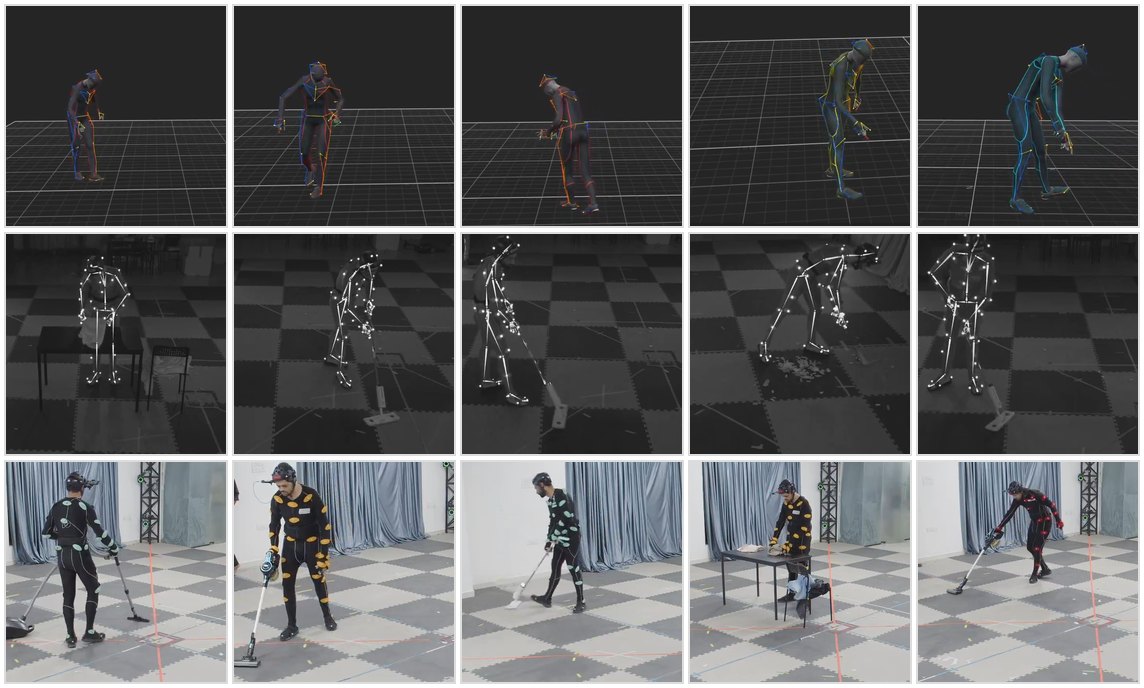
Two egocentric domains give breadth and precision. A tri-camera rig adds per-hand close-up observation. Marker-based motion capture supplies the metric skeleton everything else is validated against.
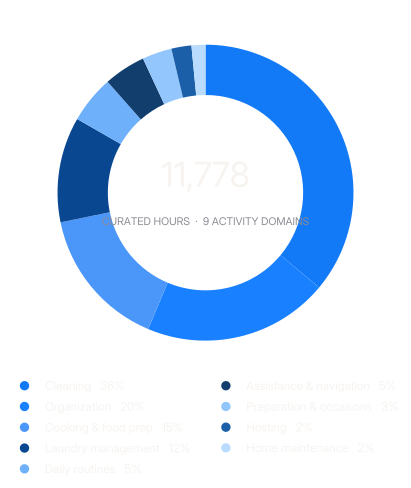
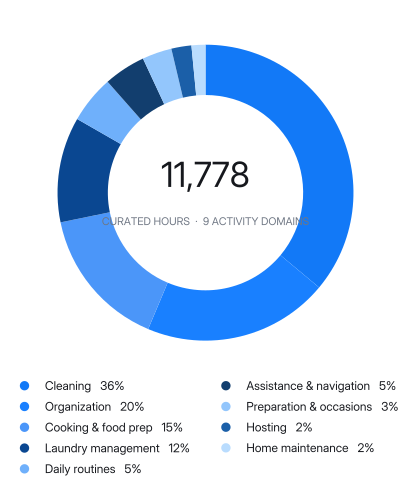
Weighted toward the cleaning, organization, and cooking work that dominates domestic settings. The distribution is intentionally non-uniform: it follows where hands-on manipulation is densest rather than sampling domains evenly.
| Activity domain | Clips | Hours | % |
|---|---|---|---|
| Cleaning | 12,021 | 4,248 | 36% |
| Organization | 6,697 | 2,387 | 20% |
| Cooking & food prep | 2,419 | 1,820 | 15% |
| Laundry management | 4,488 | 1,355 | 12% |
| Daily routines | 709 | 612 | 5% |
| Assistance & navigation | 1,933 | 538 | 5% |
| Preparation & occasions | 445 | 381 | 3% |
| Hosting | 305 | 258 | 2% |
| Home maintenance | 230 | 179 | 2% |
| Total | 29,247 | 11,778 | 100% |
50 goal-directed tasks, grouped into these nine domains. Household footage also carries a tri-granular labeling of verb, object, and goal.
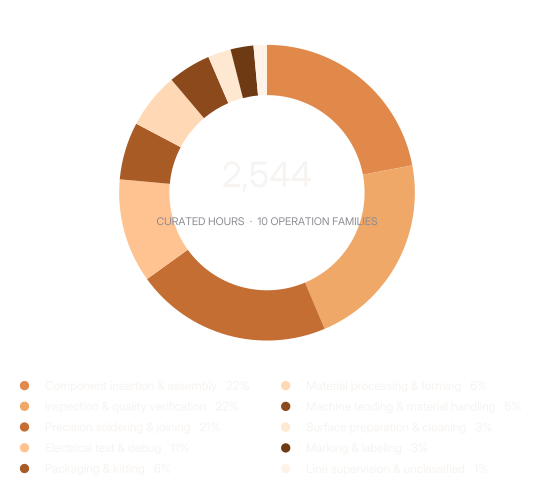
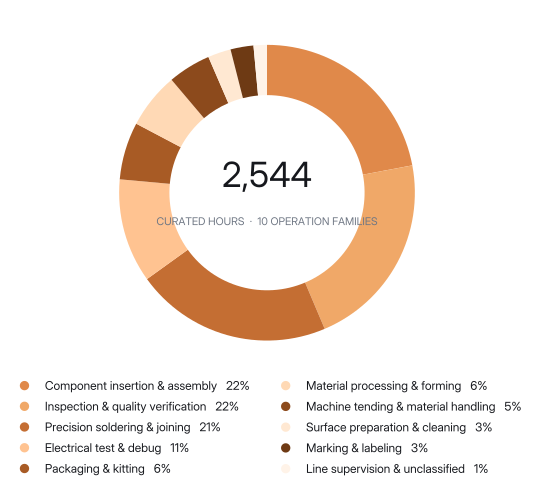
Grouped by the manipulation skill each station demands rather than by location — all of this footage comes from one environment, the assembly floor. Three families carry 65% of factory hours: the tight-tolerance, high-repetition operations where policy performance matters most.
| Operation family | Tasks | Hours | % |
|---|---|---|---|
| Component insertion & assembly | 5 | 560 | 22% |
| Inspection & quality verification | 9 | 549 | 22% |
| Precision soldering & joining | 4 | 546 | 21% |
| Electrical test & debug | 8 | 288 | 11% |
| Packaging & kitting | 5 | 160 | 6% |
| Material processing & forming | 6 | 155 | 6% |
| Machine tending & handling | 5 | 120 | 5% |
| Surface preparation & cleaning | 4 | 65 | 3% |
| Marking & labeling | 3 | 64 | 3% |
| Line supervision & unclassified | 3 | 37 | 1% |
| Total | 52 | 2,544 | 100% |
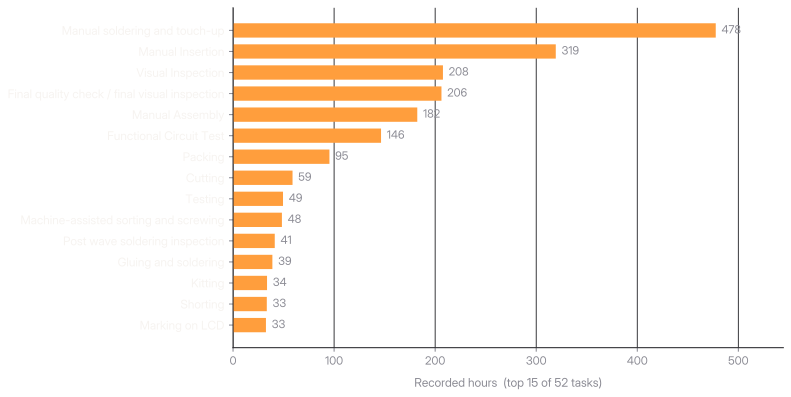
52 distinct tasks recorded on active production lines. Per-task clip counts were not recorded for this split, so hours are reported without a clip column; the split comprises 1,283 clips in total.
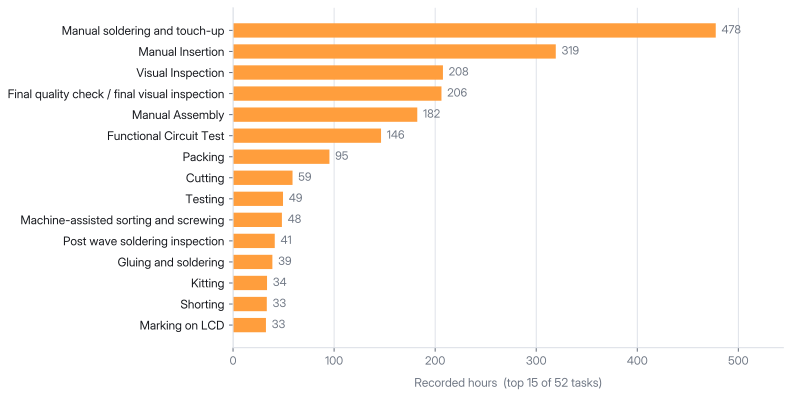
Manual soldering and touch-up alone carries 478 hours — nearly a fifth of the factory split in a single operation. The concentration is what makes this data useful: deep coverage of the few operations that dominate a real line, rather than thin coverage spread evenly across all 52.
The remaining 37 tasks account for 579 hours. The full per-task listing, grouped by family, is in the report appendix.
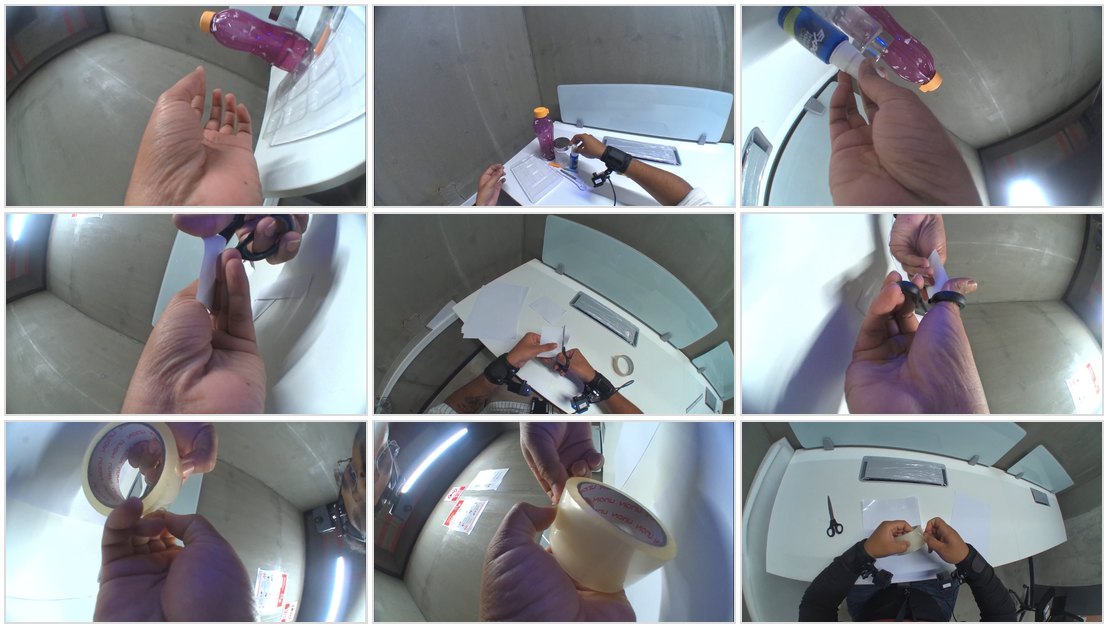
All three views are first-person. The wrist views resolve grasp and contact detail at a scale the head camera cannot, and they keep the hand in frame when the head view is blocked by the body or the object. This is the observation structure bimanual policies are usually conditioned on — hand-level resolution, not an external vantage point.
Each task is captured from all three views, so 100 tasks × 3 views = 300 clips. Hours are footage summed across the three views, at 15 minutes per view.
Marker-based optical capture gives metric 3D joint trajectories — the reference that pixel-space pose estimation is validated against, and the basis for retargeting to humanoid and bimanual kinematic chains.
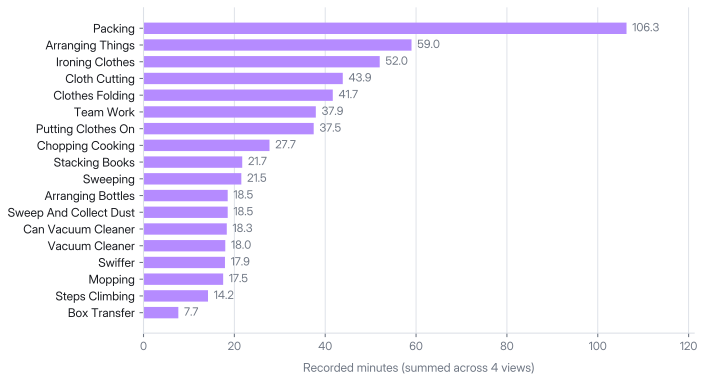
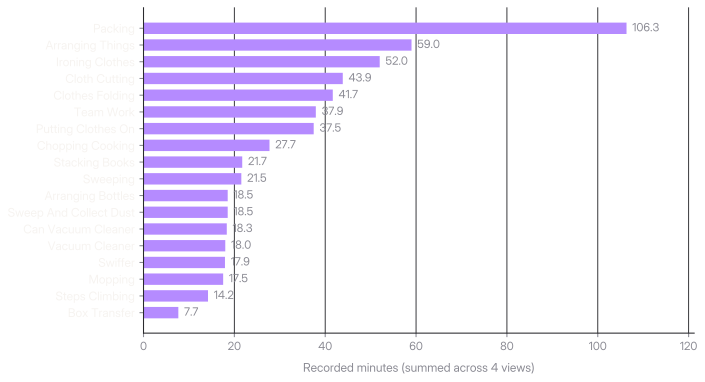
18 tasks × 4 performers = 72 takes; each take is captured from 4 synchronized views, so 72 × 4 = 288 clips carrying 580 minutes. Team work and box transfer are two-performer interaction tasks.
One sample per configuration, at full width. Every frame below is from the released corpus.
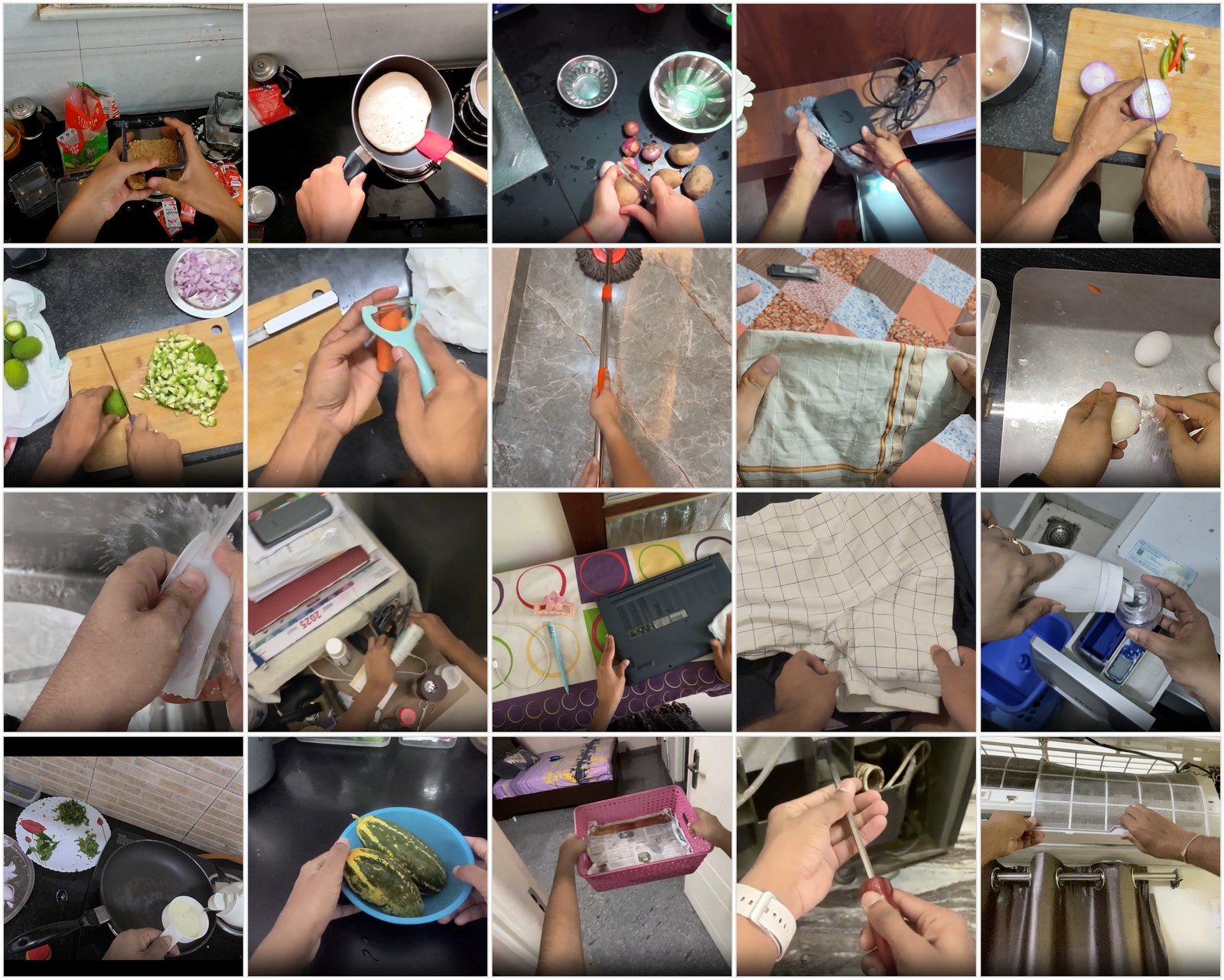
Hand visibility, lighting, and temporal integrity are measured on a random subset of 7,800 household clips drawn across all nine activity domains.
Hand visibility is the most common filter teams apply to egocentric footage. Both-hands coverage, the signal that matters for bimanual work, is released per video at every threshold so a team can pick its own operating point and trade coverage against volume.
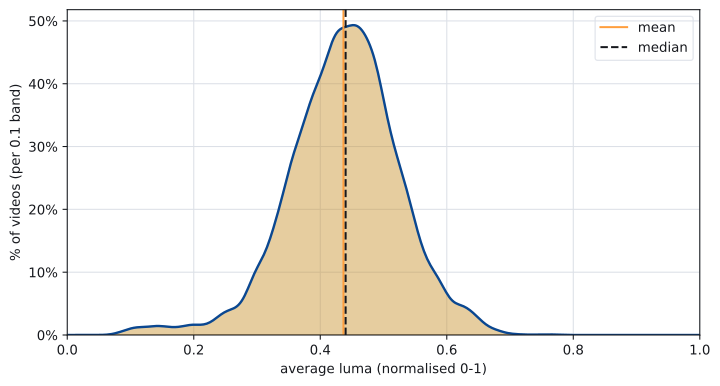
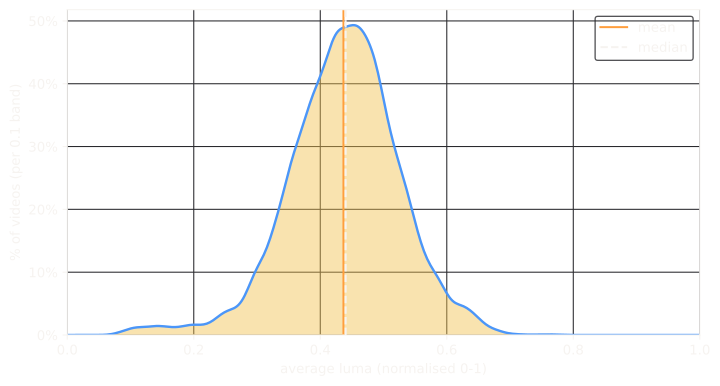
Scene brightness is measured directly as mean frame luminance rather than binned into coarse categories. The distribution is bell-shaped and centred near the middle of the normalized 0–1 range, corpus mean 0.44, with meaningful mass in both the darker and brighter tails. Deployed robots do not control their lighting, so spread is the property that matters — not a corpus shot under convenient studio light.
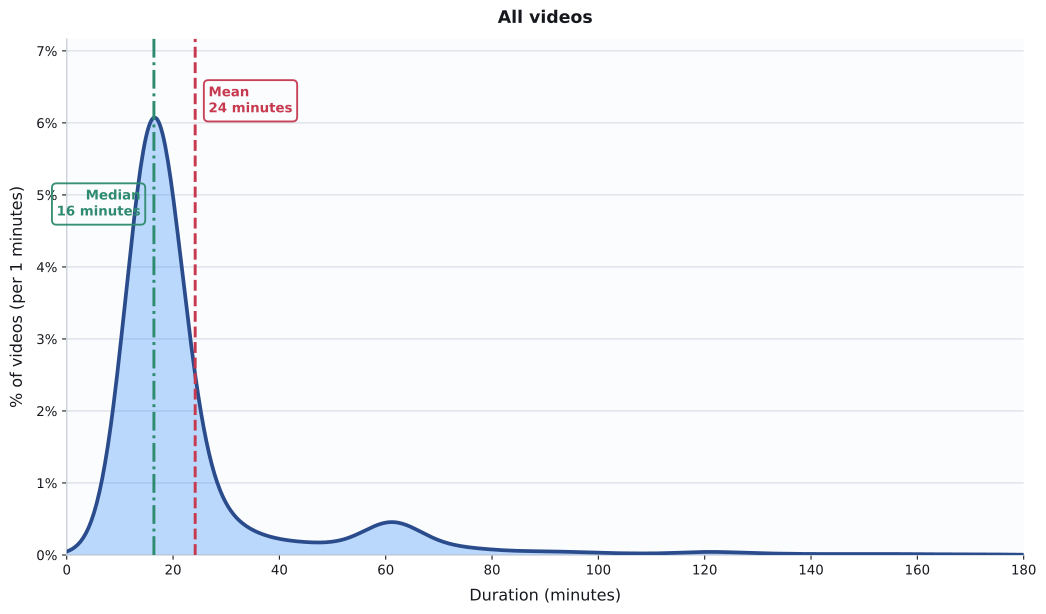
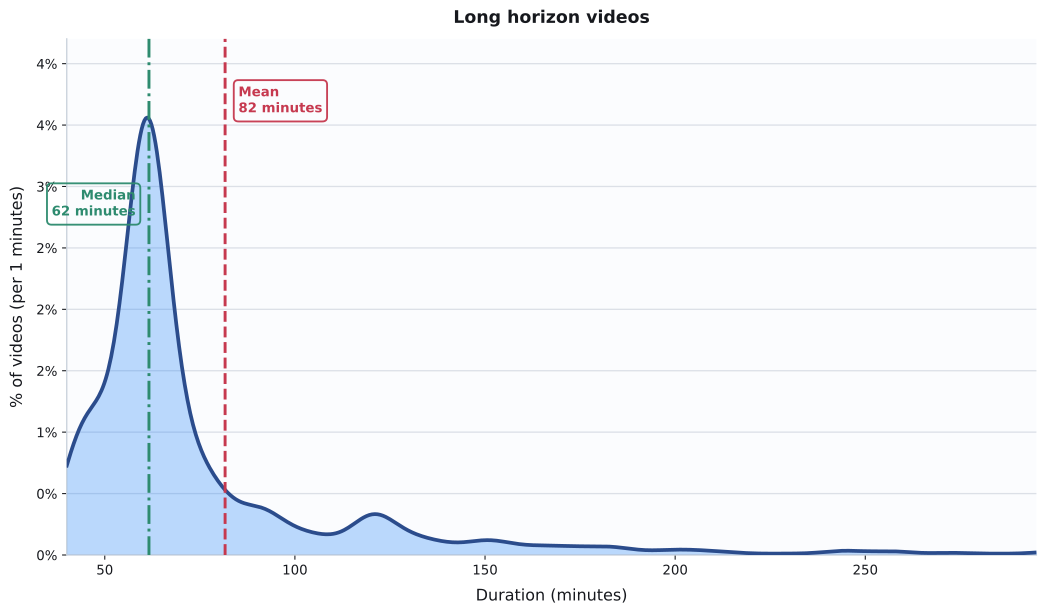
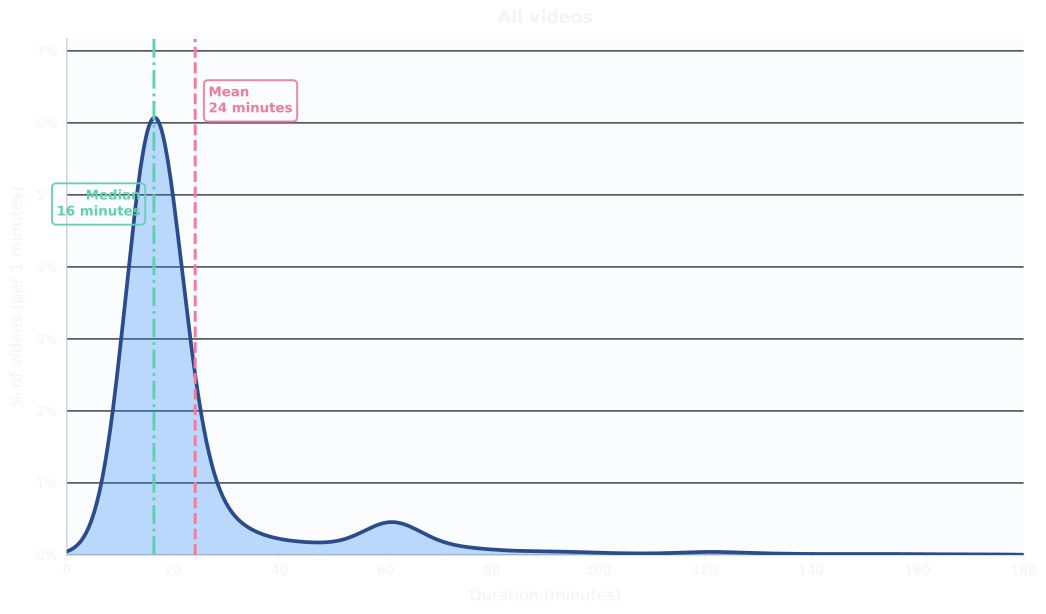
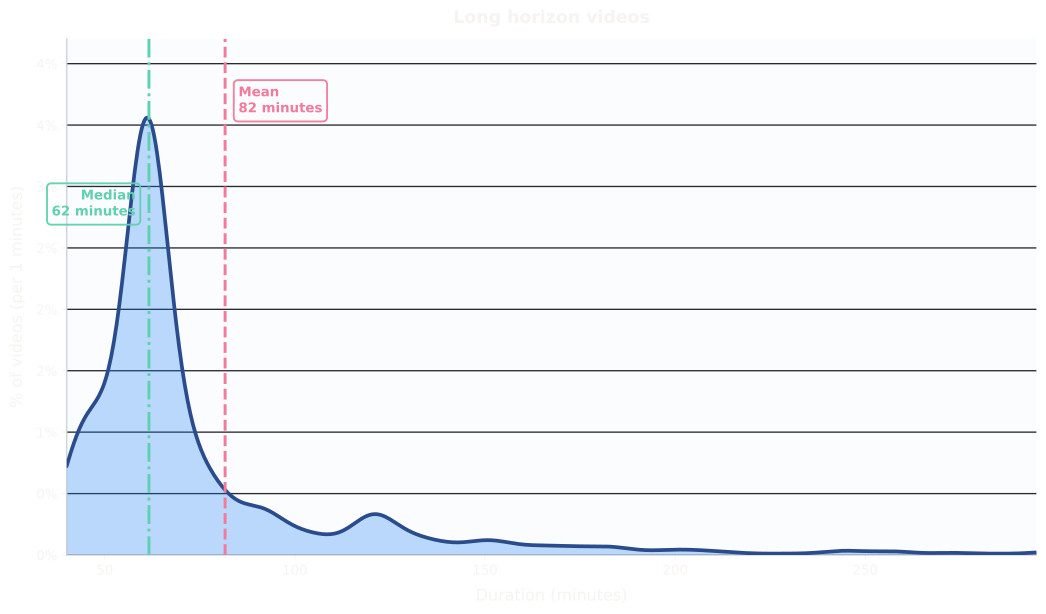
The distribution is bimodal: short manipulation vignettes (88% of clips, mean 18 min) and long-horizon recordings (12% of clips, mean 71 min). The latter are an eighth of the clips but carry over a third of all hours.
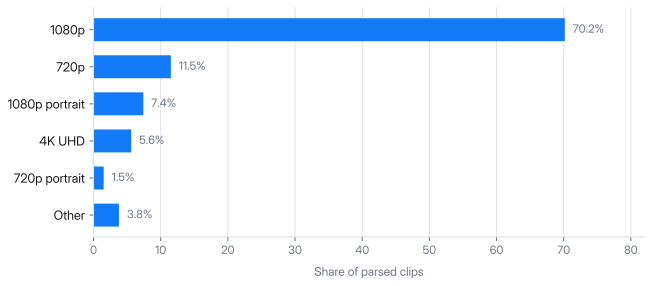
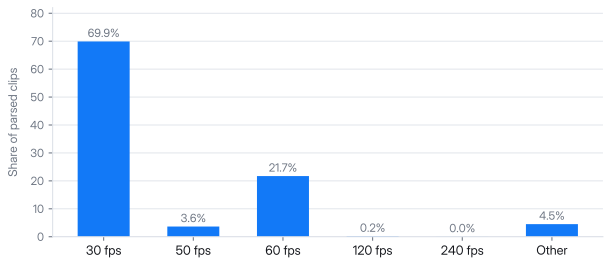
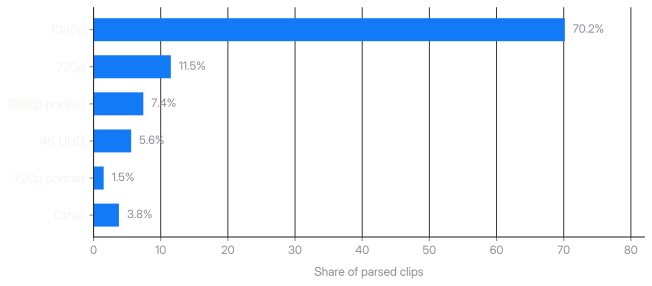
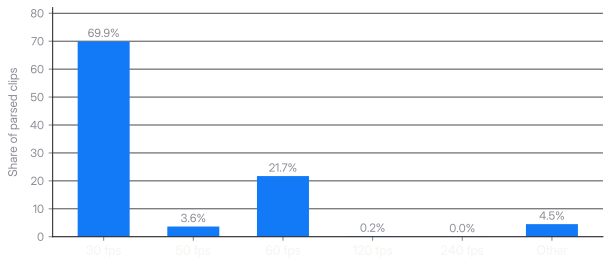
Clips ship at native capture resolution and frame rate rather than transcoded to a common target, so teams select the fidelity their pipeline expects and can study robustness to capture conditions instead of having it flattened away. The 120 fps tail resolves fast hand motion without blur.
Jump cuts and unannounced scene breaks corrupt sequence models. Clips that contain them ship with exact cut timestamps so downstream users can split or mask cleanly. Every cut identified in QC is documented with a timestamp rather than left implicit.
Duplicates inflate apparent scale, leak across eval splits, and let models overfit specific footage. Duplicate detection was run across the corpus and 218 candidates were removed before release.
Household footage carries a tri-granular labeling — verb, object, goal. Factory tasks carry station-level identity instead, because a factory task name already denotes a fixed, repeatable operation on a known part.
Failure and recovery events — dropped objects, mis-grasps, corrections — are retained rather than filtered, across both splits. Curated imitation-learning data often removes them.
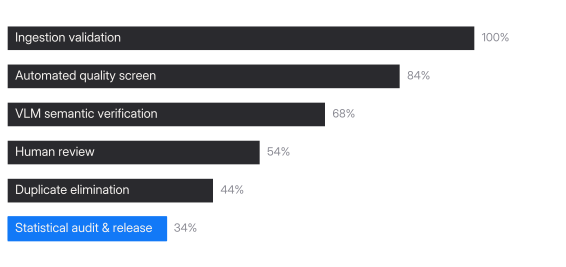
Every shipped clip cleared six stages in order, with attrition documented per stage so the material screened out is accounted for rather than hidden.
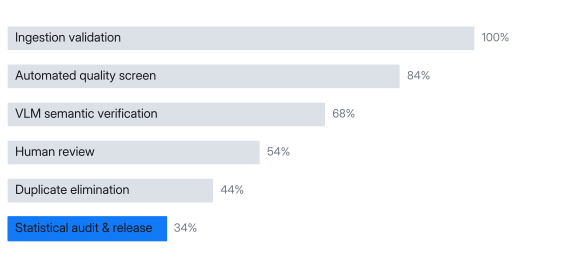
Per-stage attrition is documented and released to licensees. The ordering is deliberate: reported numbers change when the pipeline changes, not when a metric falls outside its target range.
Model choices, prompt structures, thresholds, and reviewer rubrics are not disclosed. Independent auditors are granted full access under NDA — the balance we think is right between verifiability and not handing over the methodology wholesale.
Our curation funnel decides which clips ship. This pipeline, built and run in house, decides what each one says: the action, its sub-steps, which hand, and which object. A vision–language model supplies breadth across every clip and frame; trained annotators set the standard of correctness, and every correction they make is versioned on top of the machine output.
Screen captures of the review tool on three released household episodes. Left and right hand boxes are drawn per frame; the panel carries the model's chunk caption, its scene class, and the timestamped subtask breakdown, with the human-written chunk for the same span above it. The two tracks at the foot of each clip are the human and model chunk timelines for the whole episode, so the granularity difference between the two passes is visible directly. Pause or scrub any clip to read a panel in full.
Model output is requested as strict JSON and parsed defensively: spans clamped to their chunk, confidences clamped, malformed items dropped, complete entries salvaged from truncated replies. Tracks fail soft: a spatial-track failure is recorded and the episode still ships its language layer.
Disagreements found in review are what drive prompt and threshold revisions, which is why annotation review is part of the pipeline rather than a check appended to its end. Models, prompt text, vocabularies and thresholds are not published; auditors get access under NDA.
Annotations {
  chunks[]  : { chunk_id, t_start_s, t_end_s, caption,
               scene_class, scene_confidence,
               subtasks[]: { t_start_s, t_end_s, label, confidence } }
  frames[]  : { frame_idx, ts_s, hand_object_description,
               detections[]: { track_id, label, confidence,
                              box2d{ x1, y1, x2, y2 },
                              interacts_with, interaction_prob } }
  manifest  : { schema_version, tracks_completed[], model_versions,
               timings_s, frame_count, chunk_count }
  provenance: { version, base_version, author, edited_at }
}
One row per decoded frame is emitted even when both tracks are empty, so consumers never have to
special-case gaps. track_id carries the role (left hand, right hand,
first object), while label carries the open-vocabulary object name.
Boxes are normalized to frame coordinates. The layer ships against the same versioned schema as
the per-clip metadata, additively.
Hand visibility, lighting, and temporal integrity are measured on a random subset of 7,800 household clips.
Hand visibility is one of the most common filters teams apply to egocentric footage, so we measure it directly. Every frame in a random subset of household clips is scored for hand presence and aggregated per video, giving both the at-least-one-hand figure and the stricter both-hands figure above. These are visibility measurements, and we state their sampling basis alongside them.
Next release. Visibility is the outer layer. Our immediate next deliverable reports the interactions themselves, contact and grasp structure across the released corpus: see Hand–object interaction analysis.
Scene brightness is measured directly as mean frame luminance rather than binned into coarse categories. The distribution is bell-shaped and centred near the middle of the normalized 0–1 range, corpus mean 0.44, with meaningful mass in both the darker and brighter tails. Deployed robots do not control their lighting, so spread is the property that matters, not a corpus shot under convenient studio light.
The distribution is bimodal: short manipulation vignettes (88% of clips, mean 18 min) and long-horizon recordings (12% of clips, mean 71 min). The latter are an eighth of the clips but carry over a third of all hours.
Clips ship at native capture resolution and frame rate rather than transcoded to a common target, so teams select the fidelity their pipeline expects and can study robustness to capture conditions instead of having it flattened away. The 120 fps tail resolves fast hand motion without blur.
Jump cuts and unannounced scene breaks corrupt sequence models. Clips that contain them ship with exact cut timestamps so downstream users can split or mask cleanly. Every cut identified in QC is documented with a timestamp rather than left implicit.
Duplicates inflate apparent scale, leak across eval splits, and let models overfit specific footage. Duplicate detection was run across the corpus and 218 candidates were removed before release.
Household footage carries a tri-granular labeling: verb, object, goal. Factory tasks carry station-level identity instead, because a factory task name already denotes a fixed, repeatable operation on a known part.
Failure and recovery events, including dropped objects, mis-grasps and corrections, are retained rather than filtered, across both splits. Curated imitation-learning data often removes them.
Every shipped clip cleared six stages in order, with attrition documented per stage so the material screened out is accounted for rather than hidden.
Each stage is applied in sequence to every candidate clip. Per-stage attrition is documented and released to licensees rather than published here.
Model choices, prompt structures, thresholds, and reviewer rubrics are not disclosed. Independent auditors are granted full access under NDA. That is the balance we think is right between verifiability and not handing over the methodology wholesale.
Every clip in all four streams ships with structured metadata, versioned alongside the data release. Schema changes stay backward-compatible within a major version.
Clip {
  id          : uuid
  stream      : household | factory | tricam | mocap
  timestamps  : { capture_utc, duration_ms }
  scene       : { activity_domain | operation_family, task }
  lighting    : { avg_luma_norm }
  hands       : { pct_visible, both_hands_pct }
  task        : { verb, object, goal }
  quality     : { blur, exposure, ego_motion }
  integrity   : { jumpcut_count, cut_timestamps[], dedup_hashes }
  views       : { mount, sync_offset_ms }
  consent     : { participant_id, commercial_ok, jurisdiction }
}
Tri-camera metadata adds the mount position of each view and inter-view sync offsets. Motion-capture metadata adds per-take timecode, performer identity, approval status, and the synchronized reference-video pointer.
Collection continues beyond this release. The next deliverable goes one level deeper than clips and tasks, to the interactions themselves.
A dedicated report over the released corpus: which objects are contacted, when contact begins and ends, how each grasp is formed and released, and how bimanual coordination is distributed across tasks. Contact structure is what separates footage a policy can learn manipulation from, and footage that merely shows a task being completed — and it is the axis teams most often have to annotate themselves before egocentric data becomes trainable.
Because the analysis runs over the corpus already released, it requires no re-collection and no change to the data licensees hold. It ships as an additive layer against the same versioned metadata schema.
Instrumented tactile gloves for contact, grip force, and finger pose. UMI-style handheld grippers that record from the gripper's point of view rather than the wearer's, which transfers more directly to real arms. Eye-gaze tracking as a signal of attention and intent. Denser depth. Every new modality plugs into the same synchronization and metadata schema, so the corpus grows as one dataset rather than splitting into incompatible pieces.
Hours are no longer the bottleneck; rare situations are. We use the corpus's own metadata and clip embeddings to find environments that appear less often in our data than in the real world — cramped or dimly lit kitchens, shared and multi-generational households, festival preparation, aging appliances, unusual factory cells. Each gap becomes a collection brief, so rare settings are captured deliberately instead of by luck.
The base is large-scale human data; Bumblebee sits at its high-quality end, first-person and synchronized and task-directed rather than scraped. The middle is simulation and generative augmentation, cheap to scale but only approximating real physics. The top is teleoperated and autonomous robot data, exact but expensive. Because every layer shares one task taxonomy and schema, data from one can train and validate models built on another.
Today balance comes from collection briefs and after-the-fact curation. We are closing the loop: dashboards already show in near real time how much each task and scene contributes, and we are wiring those numbers back into task assignment. Once a category hits its target share, contributors are redirected to categories still short — so drift surfaces as an alert during collection instead of a surprise at release.
Bumblebee is available under a license that supports commercial policy training. A filled datasheet and chain-of-custody documentation are included with every release, and independent auditors are welcome to review consent, redaction, and pipeline detail under NDA.